
Duration & Credit Pulse
Executive Summary
Bottom Line: NFP March 2026 delivered a headline beat of +178,000 jobs against a 59,000 consensus, but Treasury yields still declined on the week as mid-week ceasefire optimism around the U.S.-Iran conflict drove a rally that overshadowed Friday's selloff. The 10-year yield fell 8 basis points to 4.35%, credit spreads tightened materially—HY OAS narrowed 29bp to 296bp—and the VIX dropped from 31.05 to 23.87 as markets found temporary footing after five weeks of war-driven volatility. With Fed funds futures now pricing zero rate cuts for 2026, the fixed income market is recalibrating to a higher-for-longer regime complicated by oil above $111/barrel.
Duration Dashboard – NFP March 2026 and Treasury Yields
| Maturity | March 28, 2026 | April 4, 2026 | Weekly Δ | 5-Year Percentile |
|---|---|---|---|---|
| 2‑Year | 3.91% | 3.84% | −7 bp | 57th %ile (middle range) |
| 5‑Year | 4.07% | 3.99% | −8 bp | 72nd %ile (middle range) |
| 10‑Year | 4.43% | 4.35% | −8 bp | 86th %ile (elevated) |
| 30‑Year | 4.97% | 4.91% | −6 bp | 96th %ile (extreme) |
Parallel Shift Lower on Ceasefire Hopes
Curve Analysis: The Treasury curve shifted roughly 6–8 basis points lower across maturities in a near-parallel move, with the front end outperforming modestly as 2-year yields fell 7bp versus 6bp for the 30-year. The 2s10s spread narrowed to +50bp from +52bp, while the 2s30s widened modestly to +107bp from +105bp as the long end underperformed on a relative basis. This pattern reflected a broad risk-sentiment improvement from Iran ceasefire headlines rather than a fundamental reassessment of Fed policy, as last week's rate-hike fears gave way to cautious optimism. The 30-year yield's retreat from 4.97% provided notable relief after flirting with 5% for three consecutive weeks.
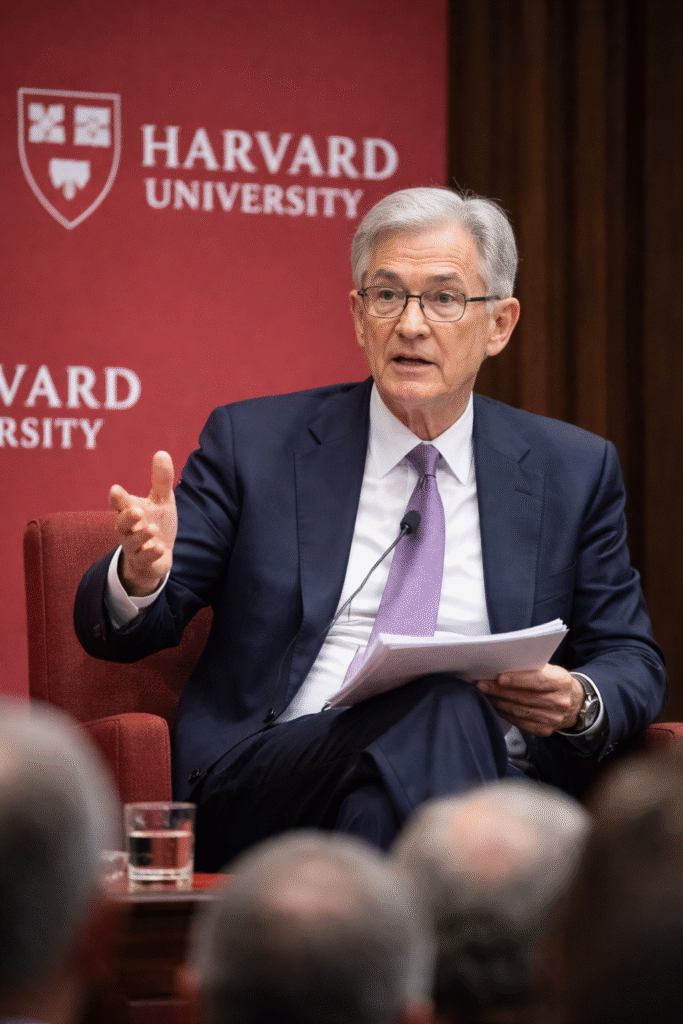
Treasury yields declined across the curve this week as evolving Iran war headlines dominated rate markets. Monday's session saw yields drop after Chair Powell's Harvard speech reinforced a patient stance, and Tuesday brought the week's largest move when President Trump suggested U.S. forces would leave Iran within weeks—temporarily boosting risk appetite. However, Wednesday's prime-time address escalated rhetoric again, and Friday's stronger-than-expected March jobs report (+178,000 vs. +59,000 consensus) partially reversed the rally, pushing the 10-year up 5bp on the day to 4.35%. Despite the Friday selloff, yields closed the week lower as the mid-week ceasefire rally carried the balance.
Credit Pulse – Spreads Tighten as Risk Appetite Returns
| Metric | March 28, 2026 | April 4, 2026 | Weekly Δ | 5-Year Percentile |
|---|---|---|---|---|
| IG OAS | 86 bp | 79 bp | −7 bp | 34th %ile (middle range) |
| HY OAS | 325 bp | 296 bp | −29 bp | 32nd %ile (middle range) |
| VIX Index | 31.05 | 23.87 | −7.18 | 74th %ile (middle range) |
Credit markets rallied meaningfully as mid-week ceasefire optimism drove risk appetite back into spread products. High yield spreads compressed 29bp to 296bp—the largest weekly tightening since December—reversing nearly all of the prior two weeks' widening. Investment grade tightened 7bp to 79bp, returning to levels last seen in mid-March. The VIX's decline from 31.05 to 23.87 confirmed the broad improvement in sentiment, though it remains well above the sub-15 readings that prevailed before the Iran conflict began in early March. As noted in our March 22 FOMC analysis, the credit market has shown resilience despite the geopolitical backdrop, with rate duration—not spread widening—driving the majority of negative total returns.
US Macroeconomic Assessment – Resilience on the Surface, Fragility Beneath
The week's data presented a deceptively constructive picture of the U.S. economy. The March employment report's +178,000 headline figure represented the strongest monthly gain since December 2024, and the decline in unemployment to 4.3% reinforced the narrative of labor market durability. However, the composition revealed significant caveats: approximately 35,000 jobs reflected the Kaiser Permanente strike resolution rather than organic hiring, and the four-month payroll average from December through March remained an anemic +47,000 per month. February payrolls were revised sharply lower to −133,000 from −92,000, further clouding the underlying trend.
Wage growth decelerated notably: Average hourly earnings rose just 0.2% month-over-month and 3.5% year-over-year—the slowest annual pace since May 2021 and a meaningful step-down from February's 3.8%. For the Fed, this cooling in labor costs provides some offset to the energy-driven inflation impulse, but the combination of slowing wages and rising consumer prices threatens to erode real purchasing power. Labor force participation slipped to 61.9%, and average weekly hours fell to 34.2—both consistent with employers reducing labor input through hours rather than headcount.
Leading indicators sent mixed signals: ISM Manufacturing expanded for a third consecutive month at 52.7, with production accelerating to 55.1 and new orders solid at 53.5. But the Prices Paid subindex surged 7.8 points to 78.3—the highest since June 2022—as panelists cited the Iran war's energy impact and tariffs on input costs. The S&P Global Services PMI, by contrast, broke below 50 for the first time since January 2023, printing at 49.8, suggesting the services sector is beginning to buckle under rising costs and uncertainty. Conference Board Consumer Confidence edged up to 91.8 but the Expectations subindex at 70.9 has now spent 14 consecutive months below 80—a level historically associated with recession risk.
Trade data reflected pre-tariff dynamics: The February trade deficit narrowed to $57.3 billion from the January surge, with exports reaching a record $314.8 billion led by nonmonetary gold and natural gas. However, new tariff actions announced this week—including 100% duties on patented pharmaceutical products and restructured metals tariffs at 50% on steel, aluminum, and copper—create additional headwinds for corporate margins and consumer prices in coming quarters. The one-year anniversary of "Liberation Day" on April 2 served as a reminder that the effective U.S. tariff rate remains near 11%, substantially above pre-2025 levels.
Federal Reserve Policy Outlook – Higher for Longer Solidifies
Chair Powell's March 30 Harvard speech was the week's most significant policy event. He characterized current rates at 3.50–3.75% as appropriately positioned to respond to risks in either direction, framed the oil supply shock as likely temporary, and stated the Fed does not need to raise rates in response unless inflation expectations become unanchored. He also warned that the national debt trajectory is unsustainable and requires attention, and described private credit market stress as a correction rather than a systemic threat.
Market pricing has shifted dramatically. Fed funds futures now show a 77.5% probability that rates remain unchanged through year-end 2026, with only a 35.7% chance of even a single 25-basis-point cut—a stark departure from the two cuts priced at year-start. A small but notable 3.8% probability of a rate hike by June was briefly priced, reflecting how far sentiment has moved. The March FOMC meeting produced a median dot plot projection of 3.4% for end-2026 (implying one cut), but Powell noted that several participants shifted from projecting two cuts to one, suggesting the median is fragile. As we discussed in our March 8 report, the interplay between energy prices and Fed credibility remains the central tension in rates markets.
The FOMC March meeting minutes, due April 8, will be closely scrutinized for details on how the committee assessed the Iran oil shock and whether any members raised the possibility of rate hikes if energy costs persist. The April 10 CPI release represents the next critical data point—any upside surprise in core inflation could rapidly shift the market's base case from "hold" to active consideration of a hawkish pivot.
Iran War and Oil Markets – The Defining Variable
The U.S.-Iran conflict remained the dominant driver of cross-asset volatility throughout the week. Monday brought Powell's calming Harvard remarks; Tuesday saw the week's most dramatic shift when Trump suggested U.S. forces would exit Iran within two to three weeks, sparking a broad risk rally. That optimism faded Wednesday when Trump's prime-time address promised to hit Iran "extremely hard" without offering a concrete withdrawal timeline. Thursday saw renewed escalation: a U.S. F-15E was reported shot down over Iran and airstrikes hit areas near the Bushehr nuclear facility. Oil prices surged 12% on the week, with WTI closing at $111.54/barrel.
The Strait of Hormuz remains the key risk vector. The UK hosted a virtual meeting of over 40 nations to discuss reopening the strait, and reports emerged that Iran was drafting a monitoring protocol with Oman. However, Trump's "TAKE THE OIL" post on Truth Social underscored the unpredictability of policy direction. For fixed income markets, the Hormuz question carries direct implications: a prolonged closure would push WTI toward $130–$150 according to some estimates, likely forcing the Fed to reconsider its transitory framing and potentially raising the probability of rate hikes materially.
Week Ahead: CPI, FOMC Minutes, and Earnings Season
- FOMC March Minutes (April 8): Will reveal the internal debate around the Iran oil shock and how the committee views the balance of risks between inflation and growth. Any language suggesting openness to rate hikes would be market-moving.
- March CPI (April 10): The week's marquee data release. Headline CPI expected to reflect energy pass-through; core CPI will determine whether the Fed's transitory thesis holds. Consensus expects 0.3% core month-over-month.
- Q1 Earnings Season Begins: Major bank earnings (JPMorgan, Wells Fargo, Citi) start April 11. Loan loss provisioning and net interest margin commentary will provide real-time credit quality signals.
- Iran Diplomacy: Continued negotiations on Strait of Hormuz reopening. Any breakthrough or breakdown would immediately reprice energy, rates, and credit.
- 30-Year Treasury Auction (April 9): Demand for long-duration paper at the 96th percentile of historical yields will test whether buyers are attracted by elevated yields or deterred by fiscal and inflation risks.
US Economic Positioning and Global Context
The U.S. economy occupies an increasingly uncomfortable position in the global landscape: resilient labor markets and solid manufacturing expansion coexist with rising inflation pressures, an energy supply shock, and an expanding tariff regime. The dollar index (DXY) held steady near 100.2, reflecting a balance between haven demand and concerns about U.S. fiscal trajectory—the budget deficit approaching 7% of GDP amid a 44% proposed increase in military spending. EUR/USD held near 1.15 with the ECB having cut its deposit rate to 2.00% and raised its 2026 inflation forecast to 2.6%.
Global central bank divergence continues to shape capital flows. The Bank of Japan faces IMF encouragement to continue gradual rate hikes (USD/JPY near 159.6), the Bank of Canada held at 2.25% amid tariff uncertainty, and the PBOC reaffirmed accommodative policy. For U.S. fixed income allocators, the combination of 4.91% on the 30-year Treasury (96th percentile) and narrowing credit spreads creates a tactical question: whether to extend duration to lock in historically elevated rates, or to maintain defensive positioning given the unresolved inflation and geopolitical risks ahead.
Key Articles of the Week
-
Prior Week's Duration & Credit PulseMariemont CapitalMarch 29, 2026Read Report →
-
US Jobs Report for March Stronger Than Expected, Likely Keeping Fed on SidelinesReuters / APApril 3, 2026Read Article →
-
Powell Sees Inflation Outlook in Check, No Need to Hike Rates Because of Oil ShockCNBCMarch 30, 2026Read Article →
-
Powell Issues a Warning on U.S. DebtHarvard GazetteApril 1, 2026Read Article →
-
Trump's Threat to Hit Iran 'Extremely Hard' Jolts Global Stocks, Bonds and OilCNBCApril 2, 2026Read Article →
-
Employment Situation Summary – March 2026Bureau of Labor StatisticsApril 3, 2026Read Article →
-
Bond Market Gets Nervous About Rising Inflation, Ballooning Debt, Sees Rate HikeWolf StreetApril 4, 2026Read Article →
-
Manufacturing PMI at 52.7% – March 2026 ISM Manufacturing ReportISM / MorningstarApril 1, 2026Read Article →
Frequently Asked Questions
What did the March 2026 jobs report show?
Nonfarm payrolls rose 178,000 in March 2026, well above the 59,000 consensus. However, roughly 35,000 of those gains reflected the Kaiser Permanente strike resolution. The unemployment rate fell to 4.3% from 4.4%, while average hourly earnings grew 3.5% year-over-year—the slowest pace since May 2021.
Why did Treasury yields decline despite a strong jobs report?
Treasury yields declined on the week because ceasefire optimism around the U.S.-Iran conflict drove a mid-week rally that more than offset Friday's post-NFP selloff. The 10-year fell 8 basis points to 4.35% as haven demand fluctuated with war developments and oil price swings.
How are credit spreads responding to the Iran oil crisis?
High yield spreads tightened 29 basis points to 296bp as mid-week risk appetite returned on ceasefire hopes. Investment grade spreads narrowed 7bp to 79bp. Despite tightening, the VIX remained elevated at 23.87, reflecting ongoing geopolitical uncertainty around the Strait of Hormuz.
What is the Federal Reserve's current rate outlook for 2026?
Fed funds futures now price a 77.5% probability that rates remain at 3.50–3.75% through year-end 2026. Chair Powell's Harvard speech on March 30 reinforced a patient posture, characterizing the oil shock as likely transitory while emphasizing the Fed is monitoring inflation expectations closely.