
Duration & Credit Pulse
Executive Summary
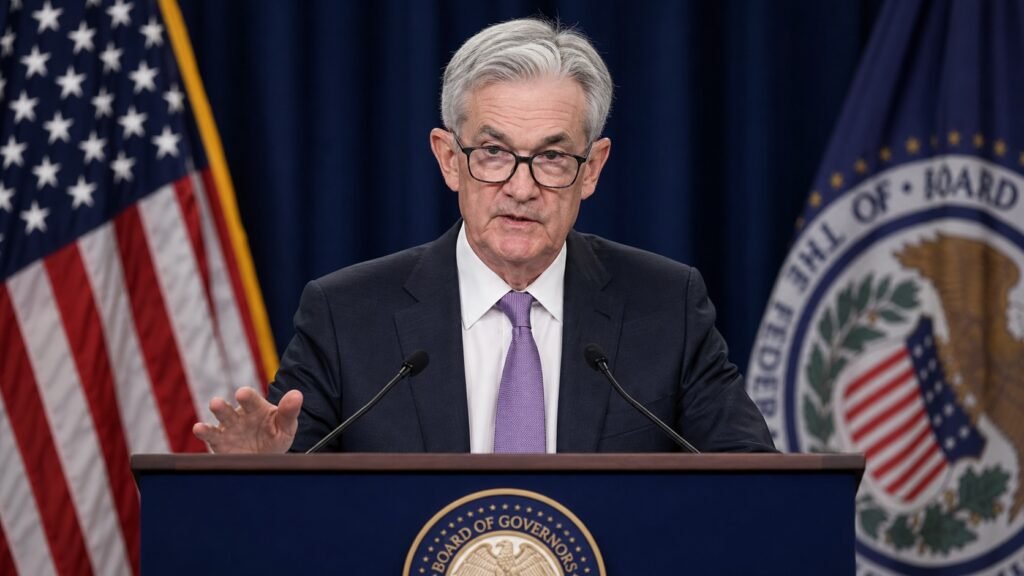
Bottom Line: The FOMC April 2026 decision dominated the week as Chair Jerome Powell's final meeting produced an 8-4 hold at the 3.50%-3.75% target range — the most dissents since October 1992. With three regional presidents pushing to remove the easing bias and a hawkish data trio (March core PCE re-accelerating to 3.2%, ISM Prices Paid reaching 84.6, jobless claims at a generational low of 189,000), the front end repriced higher in a textbook bear flattener. The 10-year Treasury closed at 4.39% (+9 bp), the 2-year at 3.88% (+10 bp), and the 30-year at 4.97% (+6 bp) as long-end yields were partially anchored by a softer Q1 GDP print and easing oil prices Friday on Iran's updated peace proposal.
Duration Dashboard
| Maturity | April 24, 2026 | May 1, 2026 | Weekly Δ | 5-Year Percentile |
|---|---|---|---|---|
| 2‑Year | 3.78% | 3.88% | +10 bp | 59th %ile (middle range) |
| 5‑Year | 3.92% | 4.05% | +13 bp | 76th %ile (elevated) |
| 10‑Year | 4.30% | 4.39% | +9 bp | 88th %ile (elevated) |
| 30‑Year | 4.91% | 4.97% | +6 bp | 99th %ile (extreme) |
Bear Flattener Following FOMC Dissent
Curve Analysis: The 2s30s spread compressed 4 bp to 109 bp as the front end absorbed the bulk of the post-FOMC repricing. With the 2-year up 10 bp versus the 30-year's 6 bp move, the curve dynamic mirrored — and modestly extended — the bear flattener that defined the prior week's report. The 5-year underperformed the curve, rising 13 bp as the belly absorbed both Fed-policy repricing and the implication of higher-for-longer real yields.
Treasury markets digested a dense calendar over five sessions, with the FOMC decision on Wednesday and a triple data release Thursday (Q1 GDP, March PCE, ECI, jobless claims, durable goods) framing the week's narrative. The 10-year yield tested an intra-week high near 4.45% — its highest level in nine months — before easing modestly Friday on softer-than-expected ISM data and headlines that Iran sent an updated peace proposal through Pakistani mediators. Auction demand was constructive across the front and belly: Monday's 2-year note cleared at 3.812%, well through the prior auction's 3.936% level, and Tuesday's 5-year and Thursday's 7-year auctions absorbed cleanly into a market repositioning ahead of the May 6 Treasury Quarterly Refunding announcement. The 10-year breakeven inflation rate rose to approximately 2.30% during the week — its highest level since the Iran war began — while the 10-year real yield held in a 2.05%-2.15% range, reflecting that the bulk of the front-end repricing came through inflation expectations rather than real-rate channels.
Credit Pulse
| Metric | April 24, 2026 | May 1, 2026 | Weekly Δ | 5-Year Percentile |
|---|---|---|---|---|
| IG OAS | 75 bp | 80 bp | +5 bp | 36th %ile (middle range) |
| HY OAS | 260 bp | 270 bp | +10 bp | 20th %ile (historically tight) |
| VIX Index | 18.71 | 17.00 | -1.71 | 35th %ile (middle range) |
Credit spreads drifted modestly wider while equity volatility cooled, an unusual divergence that highlights how risk markets have differentiated the rates story from the corporate fundamental backdrop. With 63% of the S&P 500 reported through Friday, blended Q1 EPS growth stands near 27% — the strongest reading since Q4 2021 — and aggregate beat magnitudes are running above 20%, the largest since Q1 2021. Mag-7 earnings releases through the week (Microsoft, Google, Meta, Amazon, Apple) drove the Nasdaq Composite to a fresh record close at 25,114 on Friday, with the S&P 500 closing at 7,230. The IG OAS at 80 bp remains within sight of multi-decade tights, and the HY OAS at 270 bp sits in the 20th percentile of its five-year range — historically tight territory. Notably, Q1 2026 IG gross issuance reached approximately $721 billion (up 12% year-over-year per Breckinridge), driven heavily by AI and data-center capex financing, yet spreads have absorbed this supply wave cleanly — a technical signal of unusually deep institutional demand for high-quality fixed income carry.
US Macroeconomic Assessment — FOMC April 2026 Anchors a Hawkish Data Week
The week delivered the cleanest read on the post-Iran-shock economy to date, and the data trio of Wednesday's FOMC, Thursday's GDP/PCE/ECI release, and Friday's ISM Manufacturing PMI did little to clarify the Fed's path. Each release provided support for both sides of the dissent debate: hawks pointed to a generational low in jobless claims and a four-year high in ISM Prices Paid, while doves cited the softest Q1 GDP composition in four quarters and a deceleration in real consumer spending.
Q1 2026 GDP grew at a 2.0% annualized pace, below the 2.2%-2.3% LSEG/Dow Jones consensus, with growth concentrated in two narrow sources: a federal nondefense compensation rebound from the late-2025 shutdown (federal spending +9.3%) and AI-related capex in equipment and IP products. Real consumer spending posted its slowest pace in a year, and net exports subtracted approximately 1.3 percentage points from headline growth as Q1 import front-loading reversed. The composition is materially weaker than the headline suggests, and forecasters are likely to mark down Q2 estimates given the federal-compensation rebound is unlikely to repeat.
March PCE inflation re-accelerated meaningfully: headline PCE rose 0.7% month-over-month and 3.5% year-over-year, the highest annual reading since mid-2023. Core PCE rose 0.3% MoM and 3.2% YoY, the highest since November 2023. The Dallas Fed Trimmed Mean PCE measure stood at 2.4% YoY, suggesting the breadth of inflation has not broadened to the same degree as the headline figures, but the supercore services trajectory remains a concern. Personal income rose 0.6% in March while personal spending rose 0.9%, and the personal saving rate fell to 3.6% from 3.9% — the lowest reading in roughly two years and a corroborating signal that households have been drawing down savings to maintain spending against gasoline and tariff-affected goods price pressure. Q1 ECI rose 0.9% QoQ and 3.4% YoY for civilian workers — in line with Q4 2025 — providing some reassurance that wage pressures have not re-ignited despite the inflation acceleration.
The labor market sent the most surprising signal of the week: initial jobless claims fell to 189,000 in the week ended April 25, the lowest weekly reading since 1969. The Conference Board's Consumer Confidence Index rose to 92.8 in April from a revised 92.2, exceeding the 89 Bloomberg consensus despite gasoline prices above $4.20/gallon. The labor differential — the share of consumers describing jobs as "plentiful" minus those calling them "hard to get" — improved. The combination of a generational low in layoffs alongside core inflation above 3% materially complicates the Fed's reaction function and underpinned the regional-president dissents this week.
The ISM Manufacturing PMI held at 52.7 in April, matching March, with new orders rising to 54.1 and employment slipping to 46.4. The Prices Paid component is the headline takeaway: it rose to 84.6 — the highest reading since April 2022 — extending a three-month gain of 25.6 percentage points. ISM Chair Susan Spence cited steel and aluminum tariff pass-through, broader tariff effects on imported goods, and petroleum-based product price increases tied to the Middle East conflict. Iran-related commentary appeared in 47% of survey responses; tariffs in 18%. The Prices Paid increase is the cleanest real-time evidence that the Iran energy shock is feeding through to producer cost structures.
Federal Reserve Policy Outlook: A Divided Committee
Wednesday's 8-4 vote produced the most dissents at a single FOMC meeting since October 1992, when four Greenspan-era hawks pushed back against further easing. Governor Stephen Miran extended his run of consecutive dissents to six meetings with a vote for an immediate 25 bp cut. The newer development was the regional-bank dissent: Beth Hammack (Cleveland), Neel Kashkari (Minneapolis), and Lorie Logan (Dallas) voted against the decision specifically to remove the easing-bias language from the statement, citing the Iran-driven inflation impulse. Powell described the decision as "appropriate" given uncertainty around both labor market deceleration and energy-driven inflation, and the statement retained acknowledgment of "uncertainty tied to the Middle East" and "rising energy prices."
Powell's term as Chair concludes May 15, 2026, but he confirmed during the press conference that he intends to remain on the Board of Governors at least until the U.S. Attorney's office concludes its investigation into Federal Reserve renovation projects. The Senate Banking Committee voted 13-11 along party lines on Thursday morning — hours before the FOMC announcement — to advance Kevin Warsh's nomination to the full Senate. Markets are pricing a relatively narrow path for early Warsh-led easing: with three regional presidents already on record opposing easing-bias language, a new chair would need to overcome an institutional consensus that has tilted hawkish on the Iran inflation pass-through. For additional context on the prior FOMC and the evolution of the Iran inflation framework, our March 22 report covering the prior FOMC decision traced the Committee's initial response to the energy shock.
Week Ahead: Treasury Refunding, Services PMI, and Senior Loan Officer Survey
- Treasury Quarterly Refunding (May 4 borrowing estimates; May 6 announcement): The most consequential calendar item of the coming week. Markets expect stable nominal coupon and FRN auction sizes for at least several quarters. Any shift in the bill-versus-coupon issuance mix or signal regarding buyback-program scaling will move long-end term premium directly.
- ISM Services PMI (May 5): April reading critical given the ISM Manufacturing Prices Paid rise to 84.6. A confirming services-side prices-paid acceleration would extend the front-end repricing.
- Senior Loan Officer Opinion Survey (May 5): Q1 SLOOS will inform credit-cycle thinking, particularly around C&I lending standards and CRE conditions. Bank-channel credit stress would be a non-consensus catalyst for HY widening.
- Productivity & Unit Labor Costs (May 7): Q1 advance estimate. Given Q1 ECI at +0.9% QoQ, any upside surprise in unit labor costs would reinforce the wage-inflation concern that underpinned the regional-bank dissents.
- University of Michigan Sentiment (May 9 prelim): Inflation expectations component is the key sub-component. The five-year-ahead measure has trended above 3% since the Iran war began.
US Economic Positioning and Global Context
The U.S. dollar continued to soften through the week, with the DXY breaking below 98 to a two-week low near 97.9, reflecting the relative-rates story rather than risk-off positioning. The Bank of Japan held its policy rate at 0.75% by a 6-3 vote on April 28 and Tokyo intervention chatter persisted through the week. The Iran war remained the dominant macro overhang: WTI traded near $102/bbl Friday after touching higher levels mid-week, and Brent near $110, with the Strait of Hormuz remaining functionally closed. The Senate rejected a War Powers Resolution Thursday for the sixth time as the conflict passed the 60-day mark — a development relevant to fixed income because it removes one source of near-term de-escalation pressure on energy prices.
For institutional fixed income allocators, the week's key takeaway is the renewed asymmetry between the duration story and the credit story. Long-end Treasury yields at the 99th percentile of their five-year range now offer compelling risk-adjusted carry for liability-driven portfolios, while credit spreads at the 20th-36th percentile of their range provide minimal cushion against the stagflationary tail risk implied by the FOMC dissent dynamics. The Iran war has shifted from an idiosyncratic shock to a structural inflation overhang, with the Strait of Hormuz disruption now embedded in three months of rolling PCE data — the cleanest contextual reference for which is our coverage of the brief Hormuz reopening in mid-April, which proved short-lived. Term premium in the 20-30 year sector and short-duration IG remain our preferred relative-value expressions in this environment.
Frequently Asked Questions
What did the FOMC decide at its April 2026 meeting?
The FOMC held the federal funds target range at 3.50%-3.75% by an 8-4 vote, the most dissents at a single meeting since October 1992. Governor Stephen Miran sought an immediate 25 bp cut, while Presidents Hammack (Cleveland), Kashkari (Minneapolis), and Logan (Dallas) dissented to remove the statement's easing-bias language, citing Iran-driven energy inflation and elevated price expectations.
Why did Treasury yields rise during the week ending May 1, 2026?
Front-end yields rose primarily because three regional Fed presidents publicly dissented to remove the FOMC's easing bias. Combined with March core PCE re-accelerating to 3.2% year-over-year, ISM Prices Paid reaching a four-year high of 84.6, and initial jobless claims at a generational low, markets repriced the path of policy higher and lifted the 2-year yield 10 basis points to 3.88%.
How did Q1 2026 GDP affect the bond market?
Q1 2026 GDP grew at a 2.0% annualized rate versus 2.2%-2.3% consensus, with growth concentrated in a federal nondefense compensation rebound and AI-related capex. Real consumer spending posted its slowest pace in a year. The growth miss helped anchor the long end of the curve, contributing to a bear flattener with the 30-year yield up only 6 bp versus the 2-year's 10 bp move.
What does Kevin Warsh's advancement mean for Federal Reserve policy?
The Senate Banking Committee advanced Kevin Warsh's nomination 13-11 along party lines on April 29, the same morning as the FOMC decision. With three regional presidents already on record opposing easing-bias language and Powell remaining on the Board of Governors, the incoming chair would inherit a divided committee where assembling votes for a near-term cut would face institutional resistance, regardless of his policy preferences.
Key Articles of the Week
-
Fed interest rate decision April 2026: Fed holds rates steady amid dissentCNBCApril 29, 2026Read Article
-
Key takeaways from Powell's last meeting as Fed chairCNN BusinessApril 29, 2026Read Article
-
GDP (Advance Estimate), 1st Quarter 2026U.S. Bureau of Economic AnalysisApril 30, 2026Read Article
-
PCE inflation rate March 2026: Core PCE rises to 3.2% year-over-yearCNBCApril 30, 2026Read Article
-
Manufacturing PMI® at 52.7%; April 2026 ISM Manufacturing PMI ReportInstitute for Supply Management (PR Newswire)May 1, 2026Read Article
-
Treasury Yields Snapshot: May 1, 2026Advisor Perspectives / dshortMay 1, 2026Read Article
-
Quarterly Refunding Statement (forward reference for May 6 announcement)U.S. Department of the TreasuryFebruary 4, 2026 (most recent published)Read Article
-
Prior Week's Report: Treasury Yields April 2026 — Hormuz Oil Shock Drives Bear FlattenerMariemont Capital — Duration & Credit PulseApril 27, 2026Read Article