Duration & Credit Pulse
Executive Summary
Bottom Line: The Federal Reserve delivered its third rate cut of 2025 on December 10, lowering the fed funds target to 3.50%-3.75%, but paired it with a materially hawkish shift in forward guidance that sent long-end Treasury yields higher. The revised dot plot now projects only one additional cut in 2026, down from two previously, triggering classic bear steepening as the 30-year yield rose 5 basis points to 4.85%—its 92nd percentile over five years—while the 2-year rallied 4 basis points on the delivered cut. Credit spreads remained remarkably compressed despite the policy uncertainty, with high yield OAS at 252 basis points (9th percentile) and investment grade unchanged at 74 basis points.
Fed December 2025 Rate Cut: Duration Dashboard
| Maturity | Dec 5, 2025 | Dec 12, 2025 | Weekly Δ | 5-Year Percentile |
|---|---|---|---|---|
| 2‑Year | 3.56% | 3.52% | −4 bp | 37th %ile (middle range) |
| 5‑Year | 3.71% | 3.74% | +3 bp | 50th %ile (middle range) |
| 10‑Year | 4.14% | 4.18% | +5 bp | 69th %ile (middle range) |
| 30‑Year | 4.79% | 4.85% | +5 bp | 92nd %ile (extreme) |
Hawkish Fed Cut Drives Bear Steepening
Curve Analysis: The Treasury curve exhibited textbook bear steepening in response to the Fed's hawkish cut, with the 2s10s spread widening 9 basis points to 66 basis points and the 2s30s spread expanding to 132 basis points. The front-end rally reflected the delivered rate cut and technical bid from the Fed's announced $40 billion Treasury bill purchases, while the long-end selloff priced in reduced easing expectations and persistent term premium concerns. The 30-year yield at 4.85% represents the highest level since September and sits in the 92nd percentile of its five-year range.
The December 10 FOMC meeting produced the most consequential Fed communication since the September rate-cutting cycle began. While the 25 basis point cut was widely anticipated, the accompanying dot plot revision caught markets off guard, with the median projection now showing just one additional cut in 2026 versus two cuts expected previously. The 11-1 vote—featuring a dissent from Cleveland Fed President Beth Hammack who preferred to hold rates unchanged—and reports of additional internal resistance underscored growing Committee division about the appropriate policy path with inflation proving stickier than expected.
Credit Spreads and Market Volatility Analysis
| Metric | Dec 5, 2025 | Dec 12, 2025 | Weekly Δ | 5-Year Percentile |
|---|---|---|---|---|
| IG OAS | 74 bp | 74 bp | 0 bp | 22nd %ile (low) |
| HY OAS | 244 bp | 252 bp | +8 bp | 9th %ile (extremely low) |
| VIX Index | 15.41 | 15.74 | +0.33 | 26th %ile (middle range) |
Credit markets demonstrated notable resilience despite the rates volatility, with investment grade spreads unchanged at 74 basis points and high yield widening a modest 8 basis points to 252 basis points. Both metrics remain compressed relative to historical norms—high yield at its 9th percentile represents extremely tight valuations by five-year standards, while investment grade at the 22nd percentile reflects sustained demand for corporate credit. The VIX rose marginally to 15.74, remaining well below long-term averages and suggesting equity markets absorbed the hawkish Fed pivot with equanimity.
US Macroeconomic Assessment – Fed Signals Extended Pause
The December 6-12 week was dominated by the Federal Reserve's policy recalibration, compounded by an unusual data vacuum stemming from the 43-day government shutdown (October 1 – November 12). The Bureau of Labor Statistics delayed November CPI to December 18 and cancelled the October release entirely, leaving markets without crucial inflation inputs ahead of the Fed decision. This information gap amplified the significance of the Fed's own projections, which painted a more hawkish inflation outlook than consensus expected and drove the week's dramatic curve steepening.
Labor market shows mixed signals: Initial jobless claims surged to 236,000 for the week ending December 6, up 44,000 from the prior week's revised 192,000—the largest weekly increase in nearly four years. However, economists attributed much of the spike to seasonal adjustment challenges around Thanksgiving rather than genuine labor market deterioration. Continuing claims declined 99,000 to 1.838 million, suggesting the underlying employment picture remains stable. The Fed's updated projections maintained the unemployment forecast at 4.3% for year-end 2025.
Business confidence improves modestly: The NFIB Small Business Optimism Index rose to 99.0 from 98.2 in November, though the uncertainty index climbed to 91. More concerning was the net percentage of firms raising prices, which jumped 13 points to +34%—the largest monthly increase in survey history and the highest reading since March 2023. This price-setting behavior suggests inflation pressures may prove more persistent than the Fed's benign 2025 projections imply.
Treasury auctions signal durable demand: Despite the hawkish Fed pivot, Treasury auctions delivered strong results across all three coupon offerings. The $58 billion 3-year auction on Monday stopped through, the $39 billion 10-year reopening attracted robust indirect demand, and Thursday's $22 billion 30-year sale drew solid participation. The auction results suggest investors remain willing to add duration despite the backup in yields, providing technical support for the long end.
Federal Reserve Policy Outlook
The December meeting marked a clear inflection point in the Fed's rate-cutting cycle. Having delivered 100 basis points of easing since September (including cuts of 50 basis points in September, 25 basis points in November, and 25 basis points in December), the Fed signaled that the recalibration phase is complete. The new median dot projects the fed funds rate at 3.75%-4.00% by end-2026, implying just one additional 25 basis point cut over the next 12 months—a substantial shift from September's projections of four cuts in 2026.
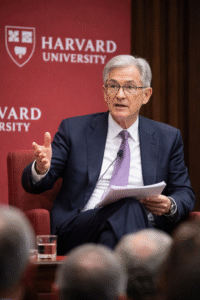
Chair Powell's press conference reinforced the pause signal, emphasizing that the Fed needs to see more progress on inflation before resuming cuts. The upward revision to core PCE forecasts—now projected at 2.8% for 2025 and 2.5% for 2026—suggests the Committee sees inflation risks as tilted to the upside. Powell explicitly noted concerns about potential tariff impacts on prices, providing the first acknowledgment that trade policy uncertainty is influencing the Fed's thinking. Fed funds futures now price approximately 35 basis points of additional cuts through 2025, down from over 100 basis points priced in September.
Week Ahead: CPI and Global Central Banks
- November CPI (December 18): The delayed inflation report takes on heightened significance following the Fed's hawkish pivot. Consensus expects headline CPI at 2.7% year-over-year with core at 3.3%. Any upside surprise would validate the Fed's cautious stance and could push 10-year yields toward 4.25%.
- Retail Sales (December 17): November retail data will provide the first clean read on holiday shopping strength. Expectations center on 0.5% monthly growth, with particular focus on discretionary spending categories.
- Bank of Japan Decision (December 18-19): The BOJ is expected to raise rates to 0.75%, which would mark the highest level since 1995 and could trigger additional yen strength with implications for Treasury demand from Japanese investors.
- PCE Inflation (December 20): The Fed's preferred inflation measure will be released Friday, with markets watching for any divergence from CPI that might influence January policy expectations.
- Housing Data (December 18-19): Existing home sales and housing starts will reveal how the sector is responding to mortgage rates above 7%. Weakness here could support the case for Fed easing in early 2026.
US Economic Positioning and Global Context
The Federal Reserve's hawkish pivot stands in contrast to continued easing abroad, widening rate differentials that support dollar strength. The Swiss National Bank held rates at 0% on December 11, while the European Central Bank and Bank of Japan have their final 2025 meetings scheduled for December 18. This divergence—with the Fed at 3.50%-3.75%, the ECB at 2.00%, and the SNB at 0%—creates a favorable carry environment for dollar-denominated assets but raises questions about the sustainability of US growth exceptionalism.
Energy markets provided a disinflationary tailwind during the week, with WTI crude falling to approximately $68-69 per barrel amid expectations of a global supply glut in 2026. Lower energy costs reduce headline inflation pressures but also signal demand concerns that bear watching. The dollar index (DXY) consolidated near 106.5, supported by rate differentials despite some profit-taking. For fixed income portfolios, the curve steepening bias appears likely to persist given the Fed's higher-for-longer messaging, with the 4.25% level on 10-year yields representing potential resistance and 4.00% serving as near-term support.
Key Articles of the Week
-
Fed Cuts Interest Rates for Third Time This Year, Signals Slower Pace AheadCNBCDecember 10, 2025Read Article
-
Federal Reserve Issues FOMC StatementFederal ReserveDecember 10, 2025Read Article
-
Takeaways: Powell Says Fed Has Delivered Enough Rate Cuts For NowCNNDecember 10, 2025Read Article
-
US Weekly Jobless Claims Surge Amid Seasonal Adjustment ChallengesReuters via KFGODecember 11, 2025Read Article
-
Treasury Yields Snapshot: December 12, 2025Advisor PerspectivesDecember 12, 2025Read Article
-
NFIB Survey: Small Business Optimism Edges Up in NovemberNFIBDecember 10, 2025Read Article
-
Swiss National Bank Holds Rates at ZeroSwiss National BankDecember 11, 2025Read Article
Frequently Asked Questions
What did the Fed decide at its December 2025 meeting?
The Federal Reserve cut interest rates by 25 basis points to 3.50%-3.75% on December 10, 2025, marking the third rate cut since September. However, the updated dot plot now projects only one additional cut in 2026, down from two cuts previously expected, signaling a more cautious approach to future easing amid persistent inflation concerns.
Why did Treasury yields rise after the Fed cut rates?
Treasury yields rose despite the rate cut because the Fed's forward guidance was more hawkish than markets anticipated. The revised projections showing fewer future cuts caused investors to reprice term premium higher, particularly in the long end, resulting in bear steepening with the 30-year yield reaching 4.85%—its highest level since September.
How tight are credit spreads compared to historical levels?
Credit spreads remain extremely compressed by historical standards. High yield spreads at 252 basis points sit at just the 9th percentile of their five-year range, while investment grade at 74 basis points is at the 22nd percentile. These tight valuations offer limited cushion against potential economic deterioration or credit stress.
What is the outlook for Fed policy in 2026?
Fed funds futures currently price approximately 35 basis points of additional cuts through 2026, reflecting the Fed's hawkish pivot. Chair Powell indicated the Fed is "well positioned to wait and see how the economy evolves," effectively signaling a pause in easing until inflation shows more convincing progress toward the 2% target.